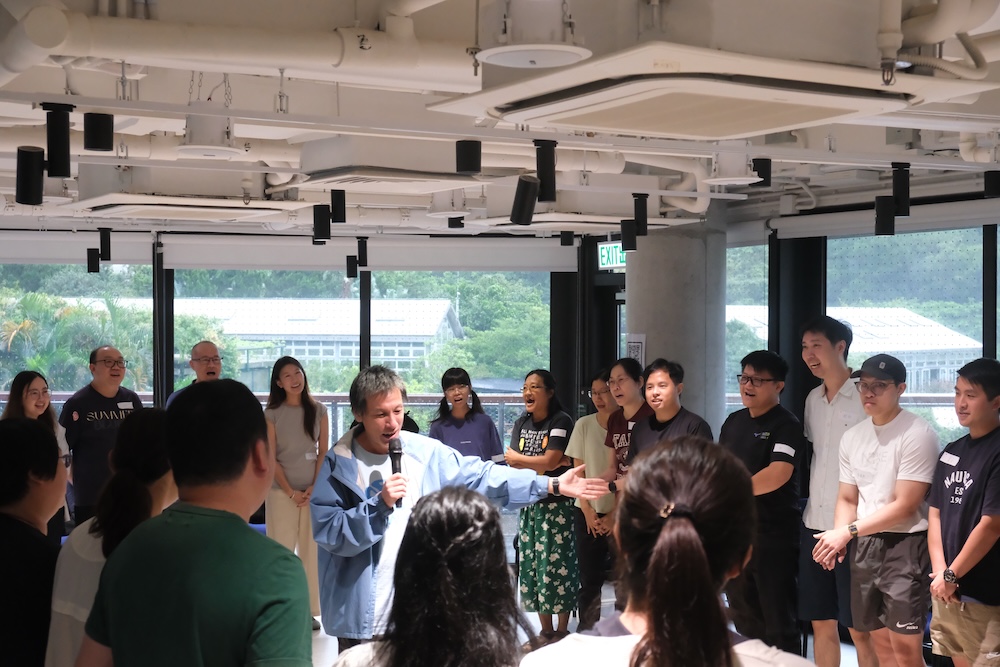
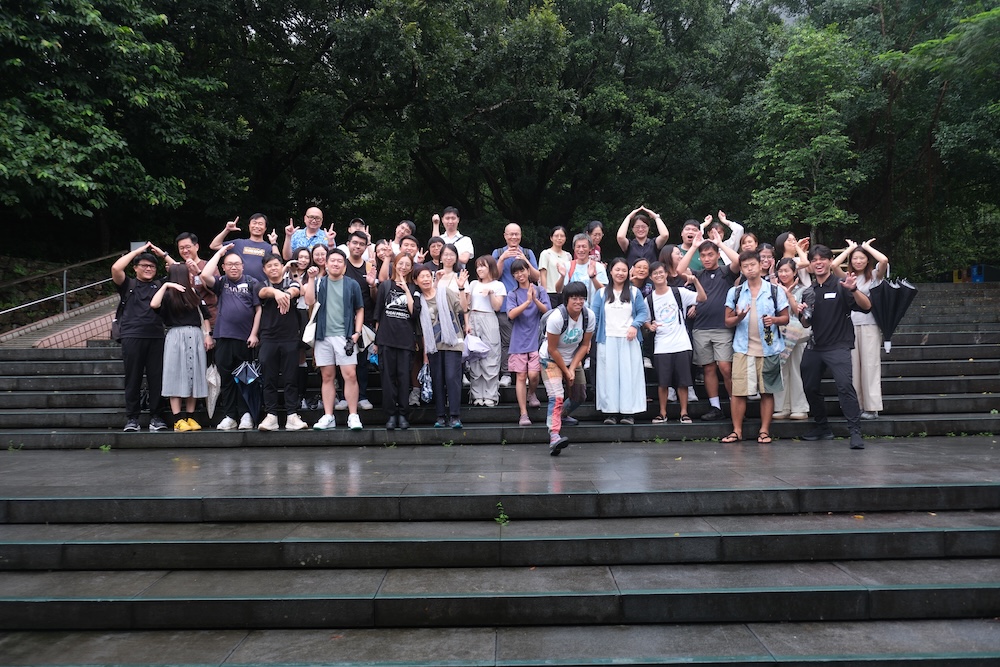
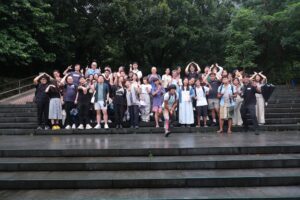
On 20 September 2025, the first Teacher Training Day of the Nature-based Eco-literate Experiential Education Programme (NEEEP) took place at Kadoorie Farm and Botanic Garden (KFBG), gathering 41 teachers from Partner Schools across Hong Kong. This marked the beginning of a professional learning journey designed to empower educators to integrate experiential, inquiry-based nature education into their school curriculum – particularly within the Primary Science curriculum framework.
NEEEP seeks to build a professional community of educators who view nature not merely as a static topic, but as a living classroom. During this first session, the KFBG team and teachers connected through interactive activities, explored the NEEEP training design, and reflected on how hands-on, inquiry-driven learning can help students link classroom knowledge with the living world around them.
The training day featured a rich lineup of thematic and hands-on sessions centred around Hong Kong’s biodiversity – the natural context through which students can meaningfully learn about science. The shared belief was that local biodiversity provides authentic, contextual and experiential opportunities for scientific exploration in Hong Kong’s classrooms.
Local Biodiversity and Urban Wildlife – led by Dr Gary Ades, Head of Fauna Conservation, and Liz Rose-Jeffreys, Conservation Officer (Projects). Teachers explored how a single species – in this case, a baby Brown Wood Owl – can serve as an anchor for inquiry-based learning across scientific and ethical dimensions, inspiring students to investigate ecological relationships. The discussion on biomimicry further demonstrated how science and applied innovation intersect, showing how humans can draw inspiration from nature’s designs.
Native Plants and Ecosystem Stability – presented by Dr Jinlong Zhang, Senior Ecologist, Flora Conservation Department. Dr. Zhang shared that Hong Kong’s forests are the cradle of diverse flora and fauna, with encouraging signs of habitat recovery despite environmental challenges. The accompanying field plant survey illustrated how teachers can guide students to observe and document local flora scientifically, fostering curiosity and a sense of stewardship.
Recycled Camphor Wood Workshop – facilitated by Michelle Tam, Artist and Education Officer, Holistic Education Department. Teachers hand-carved their own creations using camphor wood processed from fallen trees at KFBG. The workshop room was filled with the wood’s distinctive, refreshing scent – a sensory reminder of the intimate connections between people, trees and place. This activity embodied the reconnection of hand, heart and mind, revealing that fallen wood can be seen as a “fallen treasure”, a material carrying blessings from the land. It encouraged teachers to rediscover creativity while linking back to natural materials, culture and sustainability.
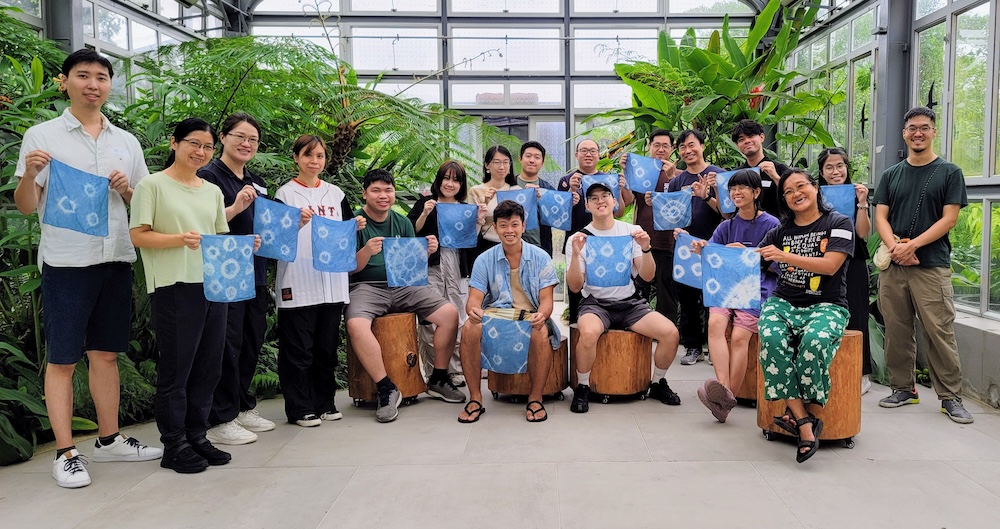
Natural Indigo Dye Workshop, led by Benjamin Hao, Natural Dye Artisan. This session highlighted the science of temperature and pH control in natural dyeing – a beautiful blend of art, chemistry and sustainability (in contrast to synthetic dyes). It demonstrated how this cross-disciplinary process can be adapted for upper primary or junior secondary levels, introducing scientific principles through creativity and environmental awareness.
Together, these sessions showcased how Head, Hand and Heart learning can deepen both conceptual understanding and emotional connection to nature – key elements in developing students’ eco-literacy.
The training also received a message of encouragement from Mr Ralf Tong Wai Ming, Senior Curriculum Development Officer (Science), Education Bureau, who affirmed NEEEP’s alignment with the curriculum’s focus on scientific inquiry, values education and sustainability awareness.
As the teachers concluded the first NEEEP Teacher Training Day, many expressed excitement about bringing these ideas back to their classrooms. The day closed with optimism and shared commitment, to cultivate students who think systemically, act compassionately and care deeply for the natural world.